



Case Study 02
Improving Color Removal in Textile Wastewater
Challenge
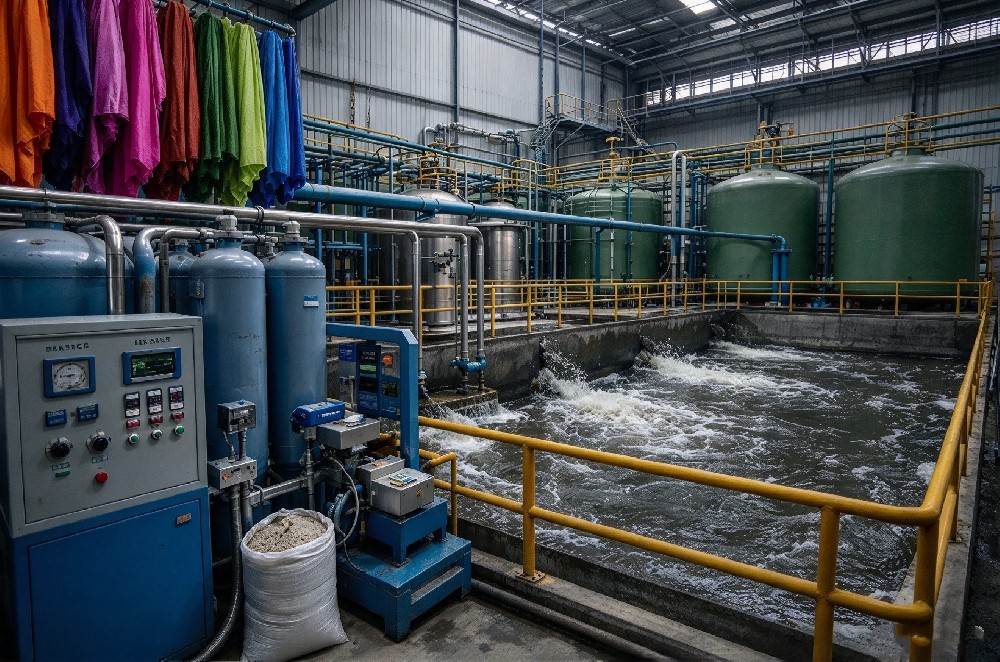
A textile dyeing factory with a treatment capacity of 2,000 m³/day faced persistent color removal challenges when treating reactive dye wastewater.
The wastewater had an average influent color of 450 Pt-Co and COD of 780 mg/L. The existing alum-based treatment system used a coagulant dosage of 300 mg/L, but the treated wastewater color frequently remained at 150–200 Pt-Co, resulting in inconsistent treatment performance.
The customer needed a more effective coagulation process to improve color removal, reduce chemical consumption, and lower overall wastewater treatment costs.
Solution
The treatment program was optimized by replacing alum with 31% polyaluminum chloride (PAC), supported by anionic polyacrylamide (PAM).
Jar tests were conducted to determine the appropriate chemical dosage and pH conditions. The selected treatment program used:
PAC 31%
150 mg/L as the primary coagulant.
Anionic PAM
1.2 mg/L as a settling aid.
Coagulation pH
6.0–6.8.
Settling time
40 minutes under the reported operating conditions.
The existing dosing equipment was retained, with the dosing pump flow rate recalibrated for the new chemical program.
Results
The reported treatment performance under the optimized program:
COLOR REMOVAL
92%
Treated color reduced to 36 Pt-Co
COD REMOVAL
72.4%
Coagulation-stage performance
COAGULANT DOSAGE
−50%
300 → 150 mg/L after switching to PAC
TREATMENT COST
−33%
2,360 → 1,580 VND/m³