


Well cleaning and workover operations need surfactants that actually work downhole — not just in a lab beaker at room temperature. Pick the wrong chemistry and you'll pump thousands of liters of "cleaning fluid" that does nothing above 80 °C, or you'll violate environmental discharge limits because the product wasn't biodegradable enough. This article walks through the three surfactant families we see most often in well cleaning — AEO, APG, and SEO — and when each one is the right call.
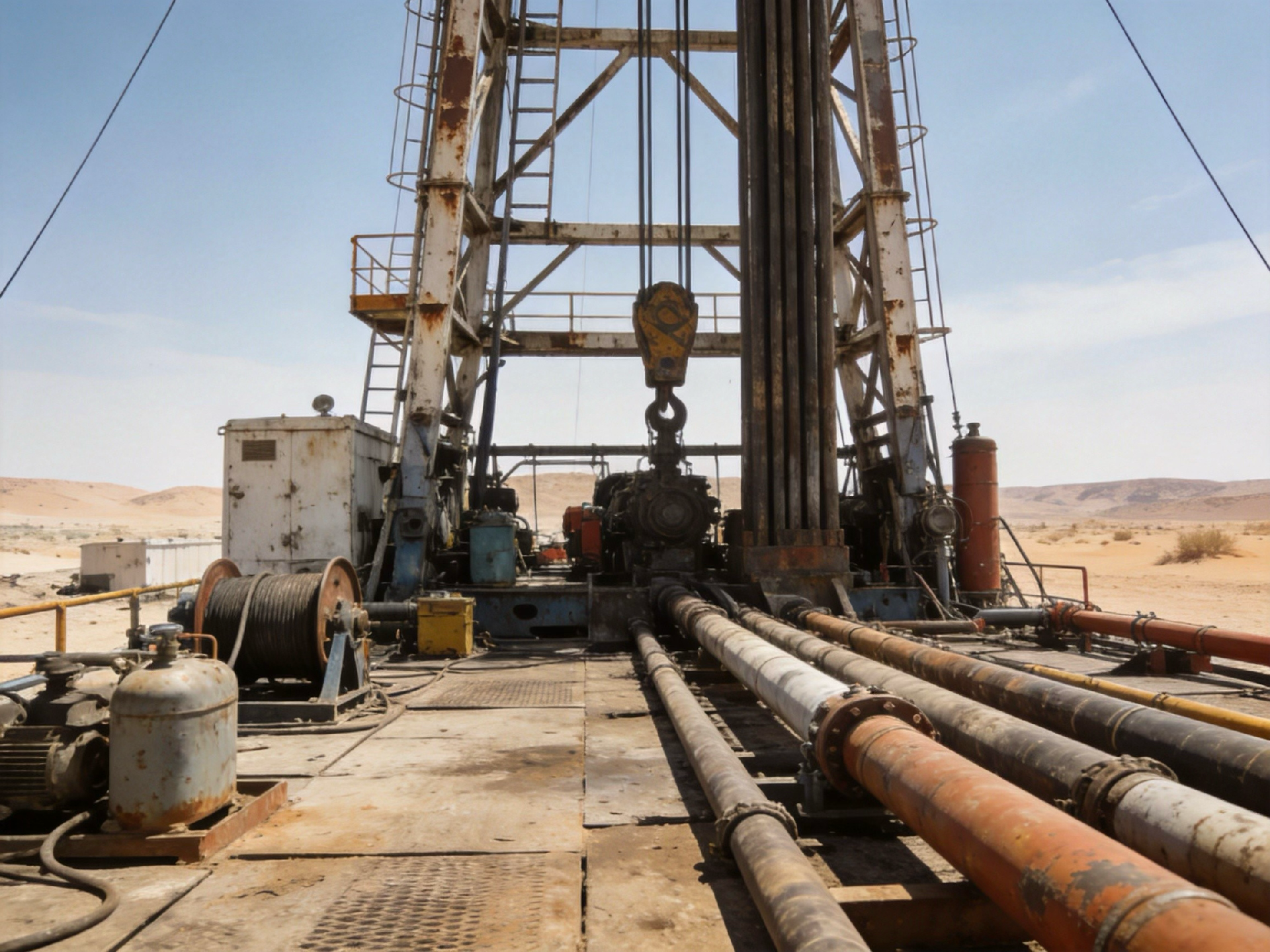
Workover rig during a well cleaning operation. The surfactant choice determines whether the job actually removes downhole deposits or just circulates expensive water.
Why Surfactants Matter in Well Cleaning
Downhole deposits — paraffin wax, asphaltenes, scale, drilling mud residue, emulsion blocks — don't dissolve in water. You need something that can wet the deposit, penetrate it, and either dissolve it or lift it off the formation and tubular surfaces. That's what surfactants do: they lower the interfacial tension between the deposit and the cleaning fluid, and they emulsify or solubilize the hydrocarbon so it can be circulated out of the well. But downhole conditions are hostile. Temperatures can range from 40 °C in shallow wells to over 200 °C in deep HPHT wells.
The fluid has to survive high salinity, high pH (if you're using caustic), and sometimes high H₂S or CO₂. And if the produced water is going back into the environment or into a disposal well, biodegradability matters. That's why "one surfactant fits all" doesn't work.
The Three Main Families:
What They Are AEO (Alcohol Ethoxylates) are the workhorses. They're made by reacting a fatty alcohol (usually C12–C15 from coconut or palm kernel oil, or synthetic alcohols) with ethylene oxide. The number of EO units determines the hydrophilic-lipophilic balance (HLB). AEO-9, for example, has 9 EO units and is moderately hydrophilic; AEO-7 is more oil-soluble. They're cheap, widely available, and effective at moderate temperatures.
APG (Alkyl Polyglucosides) are the "green" option. They're made from renewable raw materials — fatty alcohols and glucose (from corn or wheat starch). They're nonionic, mild, and fully biodegradable. They don't foam as much as AEO, which is an advantage in some applications. But they're more expensive, and their temperature stability is limited compared to SEO.
SEO (Sulfonated Ethoxylates or Sulfonated Olefins) are the high-temperature specialists. They're anionic surfactants with a sulfonate head group, which gives them excellent thermal stability and salt tolerance. They can handle temperatures above 200 °C without breaking down, and they work in high-salinity brines where nonionic surfactants might precipitate. The trade-off is cost and, in some cases, lower biodegradability than APG.
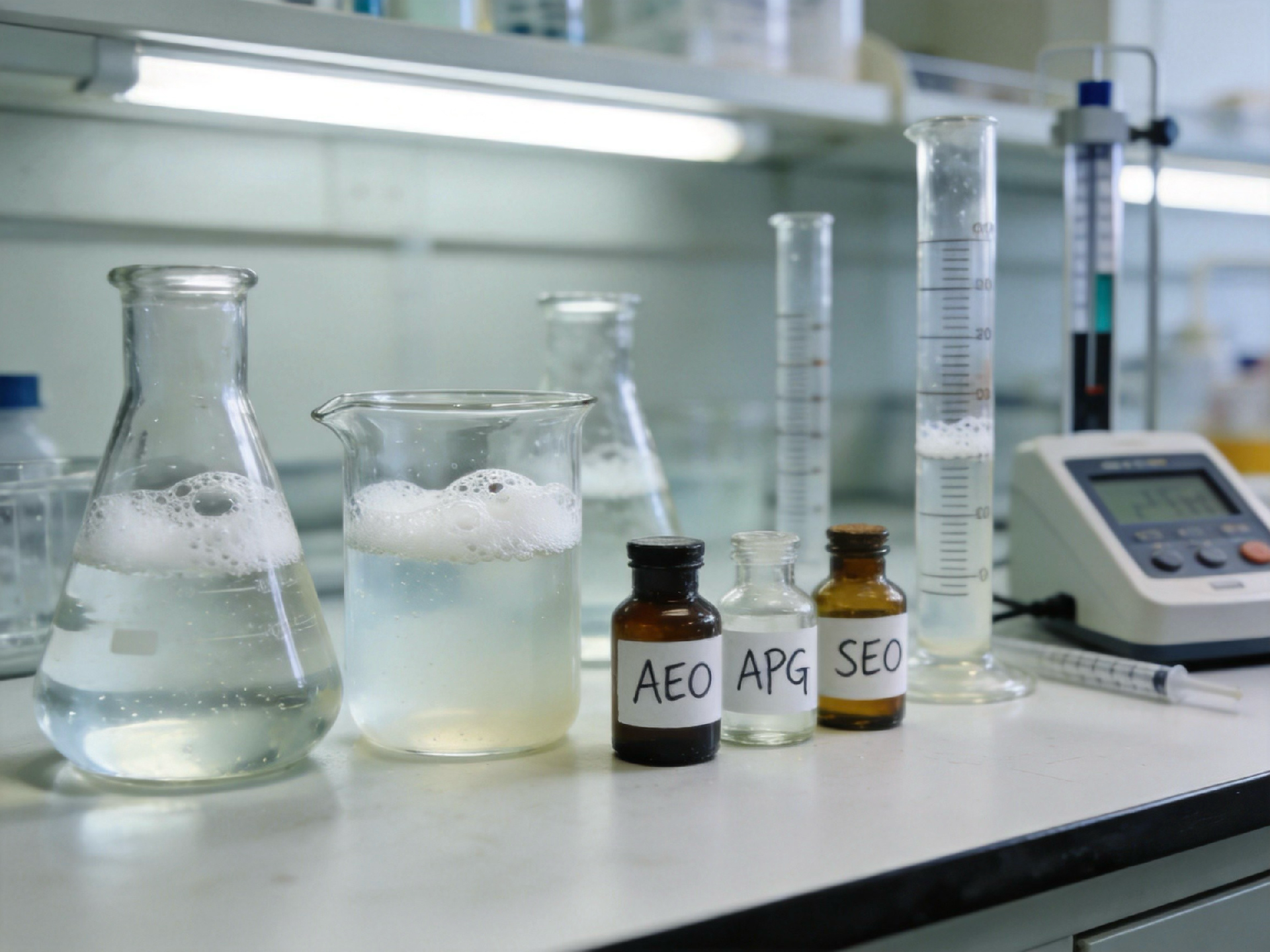
Lab evaluation of three surfactant families. Same deposit, same temperature — but different chemistries give very different cleaning results.
Five Questions That Decide the Chemistry
Before we recommend a surfactant, we ask these five questions. The answers point to AEO, APG, or SEO pretty quickly.
1.What's the bottom-hole temperature?
This is usually the first filter. If the well is below 80 °C, AEO works fine and is the most cost-effective. Between 80 °C and 150 °C, you might need APG (if biodegradability matters) or start looking at SEO. Above 150 °C, SEO is usually the only option that won't thermally degrade. We've run SEO formulations at 200 °C with cleaning efficiency above 95% — that's the temperature range where AEO and APG just fall apart.
2. Are there environmental discharge requirements?
If the produced water or cleaning fluid is going to be discharged onshore or offshore, you need to know the local regulations. APG is fully biodegradable (OECD 301 tests) and is often the default choice in environmentally sensitive areas — shallow water offshore, freshwater zones, or jurisdictions with strict discharge limits. AEO is moderately biodegradable; some formulations pass the tests, some don't, depending on the alcohol chain length and branching. SEO is the least biodegradable of the three, so it's usually avoided when discharge is a concern unless you can contain and treat the fluid.
3. What deposit are you trying to remove?
Paraffin wax responds well to all three, but you get better results with higher HLB surfactants (AEO-9, APG with longer alkyl chains) because they emulsify the wax more effectively. Asphaltenes are tougher — they often need a combination of surfactant and aromatic solvent, or a high-temperature-stable surfactant like SEO if the well is hot. Scale (calcium carbonate, barium sulfate) usually needs acid, not surfactant, but surfactants help wet the scale and improve acid contact. Drilling mud residue (oil-based mud filter cake) responds well to AEO or APG, depending on temperature.
4. What's the brine composition? High salinity (above 100,000 ppm TDS) or high divalent cations (Ca²⁺, Mg²⁺) can precipitate some surfactants, especially anionic ones. Nonionic surfactants like AEO and APG are more tolerant of high salinity. But SEO, despite being anionic, is designed for high-salinity applications — the sulfonate group is more salt-tolerant than carboxylates, and SEO formulations can handle brines up to 200,000 ppm or more. If you're working in a salt dome or a highly saline formation, SEO is worth testing.
5. What's the budget? AEO is the cheapest, typically 1.5–2.5 USD/kg for standard grades. APG is 2–3× more expensive. SEO is in the middle — more expensive than AEO but often cheaper than APG, depending on the specific formulation. If the well is shallow, cool, and there are no environmental constraints, AEO is the obvious choice. If you're in a deep, hot well with no discharge concerns, SEO gives you the best performance per dollar. APG sits in the middle: you pay for biodegradability.
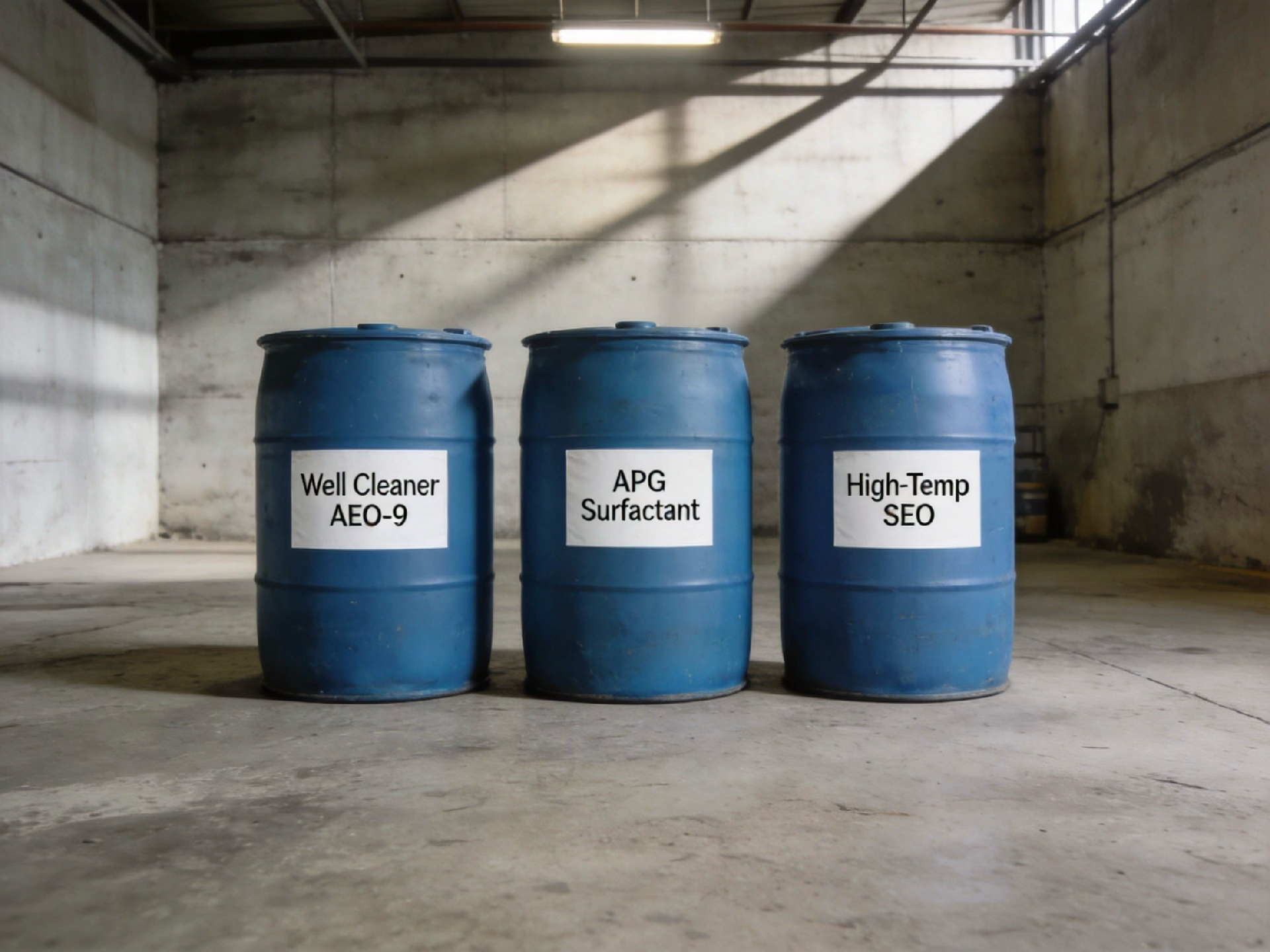
Surfactant concentrates ready for blending. AEO, APG, and SEO are supplied as liquids and can be diluted on site to match the job's requirements.
When to Use Each One: Practical Scenarios
AEO makes sense when: The well is below 80 °C, the deposit is paraffin or light asphaltene, and there are no strict discharge limits. Typical applications: shallow wells in warm climates, routine wax removal, pre-flush for acidizing in cool formations. It's also a good choice when you need to pump large volumes — the cost per liter of cleaning fluid is lowest with AEO.
APG makes sense when: The well is below 120 °C, biodegradability is a requirement (offshore, freshwater zones, environmentally sensitive onshore locations), and the budget can handle the premium. Typical applications: shallow water offshore platform wells, freshwater aquifer protection zones, jurisdictions with strict discharge permits. APG is also a good choice when you're cleaning production tubing in a well that feeds into a sensitive surface water system.
SEO makes sense when: The well is above 150 °C, the brine is highly saline (above 100,000 ppm), or the deposit is tough (heavy asphaltene, aged emulsion blocks). Typical applications: deep HPHT wells, geothermal wells, high-salinity formations, mature fields with complex emulsion problems. SEO is also worth considering when you need to clean the well and then produce it immediately — the surfactant won't thermally degrade and cause additional emulsion problems downstream.
What to Expect from Each Chemistry
AEO: At 60 °C, you should see 70–85% removal of paraffin wax in a standard lab test (rotating drum or static immersion). Cleaning time is typically 2–4 hours at 1–3% surfactant concentration. Foam is moderate, so you might need a defoamer if you're circulating large volumes.
APG: At 80 °C, expect 75–90% removal of paraffin or light asphaltene. Cleaning time is similar to AEO, 2–4 hours, but APG foams less, which is an advantage in low-pressure wells or when you're trying to minimize fluid losses. Biodegradability is excellent — OECD 301B tests typically show >60% degradation in 28 days.
SEO: At 200 °C, we've measured >95% removal of heavy asphaltene deposits in lab tests. Cleaning time can be shorter (1–2 hours) because the surfactant is more aggressive at high temperature, but you need to be careful with formation damage — SEO can emulsify formation oil if you're not careful. Biodegradability is lower than APG, so containment and treatment are important if discharge is a concern.
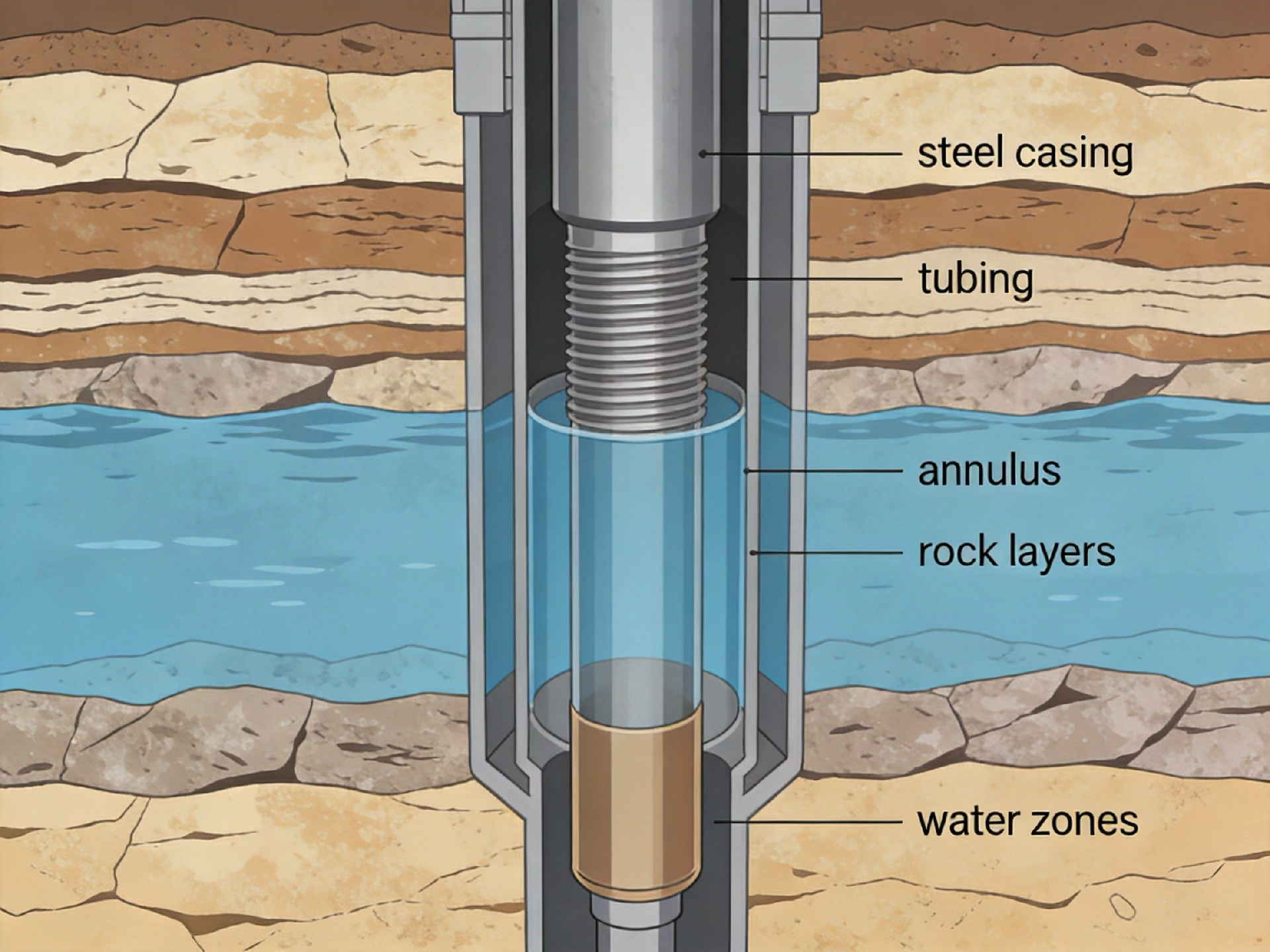
Wellbore cross-section. Surfactant selection depends on temperature, brine composition, and the type of deposit you're trying to remove at each depth.
What We Supply
For well cleaning and workover applications, we supply AEO, APG, and SEO surfactants in a range of grades optimized for different temperature ranges and deposit types.
AEO series: AEO-7, AEO-9, AEO-15 — from oil-soluble to water-soluble, for temperatures up to 80 °C. Standard grades for paraffin and light asphaltene removal.
APG series: C8–C10 and C12–C14 alkyl chain lengths, for temperatures up to 120 °C. Fully biodegradable, low-foam formulations for environmentally sensitive applications.
SEO series: High-temperature sulfonated ethoxylates and sulfonated olefins, stable up to 200 °C and above. Designed for HPHT wells, high-salinity brines, and tough deposits like heavy asphaltene or aged emulsion blocks.
All products are supplied as concentrates and can be diluted on site to match the job's requirements. We support selection with lab testing on your crude or deposit sample, and we can adjust the formulation if the standard grades don't quite fit.
Full documentation is available: TDS, MSDS, COA per batch, and compatibility data with common oilfield chemicals (corrosion inhibitors, scale inhibitors, biocides). Send us a deposit sample or well conditions (temperature, brine composition, deposit type).
We'll run lab tests and come back with a recommended surfactant, concentration, and exposure time.
Request a Sample →
This article reflects our application team's field and lab experience. Surfactant performance is highly dependent on downhole conditions — the targets and approaches described here are typical, not universal. If you have a specific well cleaning problem, we're glad to look at the actual sample and conditions.